The page images that settled a specific question. Nothing here
is illustrative — each is the thing that was actually looked at before a
decision was made.
Page numbers are positions in the scanned PDF. The
author’s own folio numbers, written at the foot of each sheet, run three
lower.
How the page was read
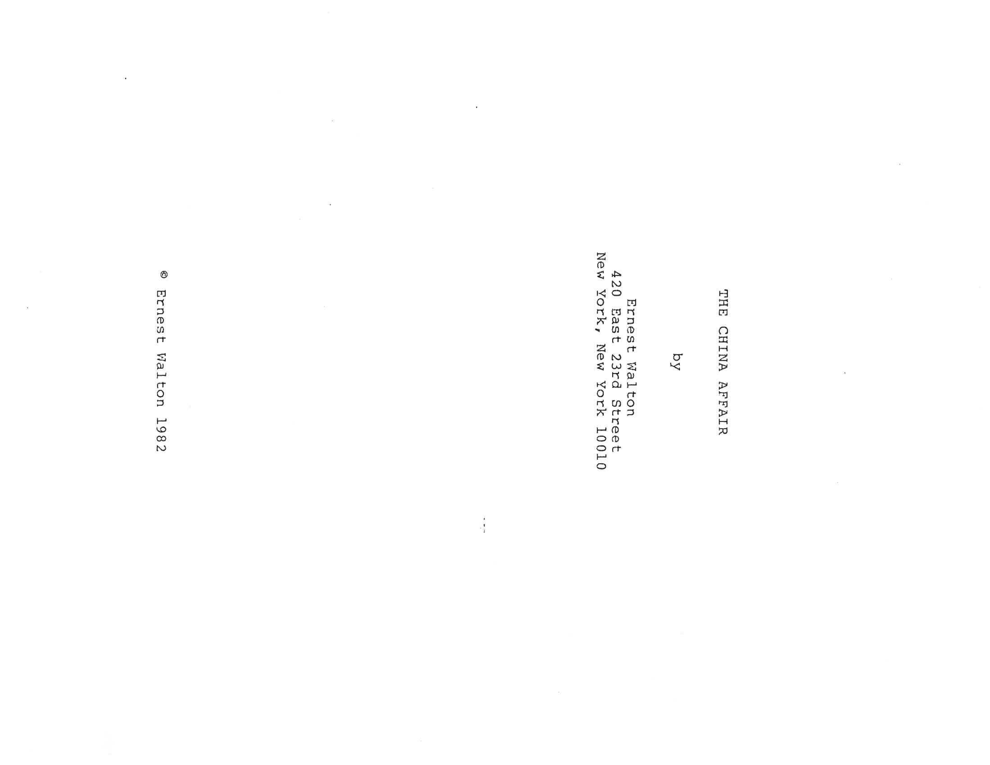
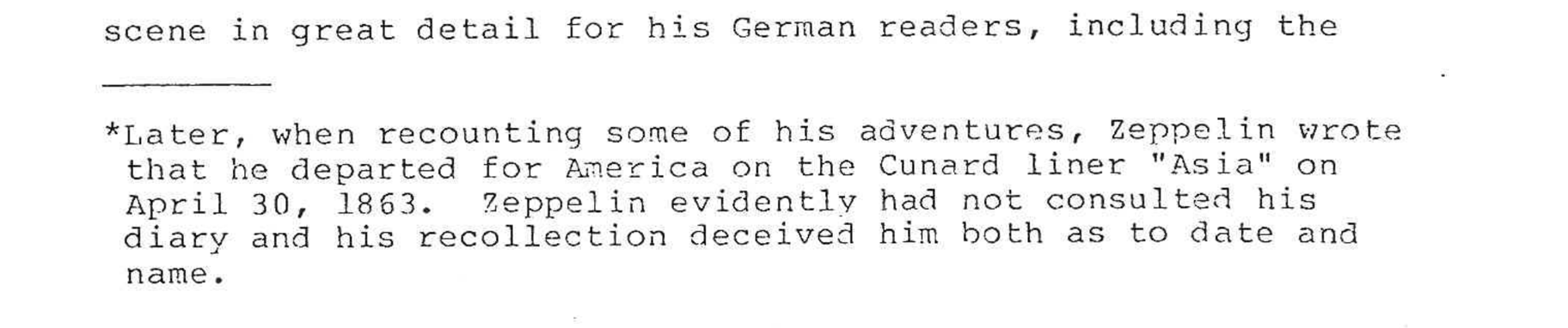
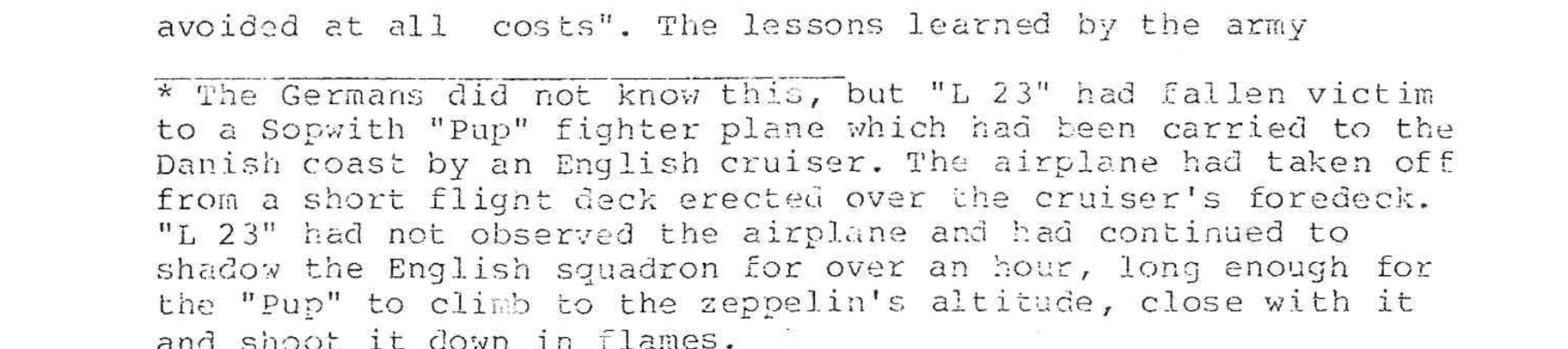
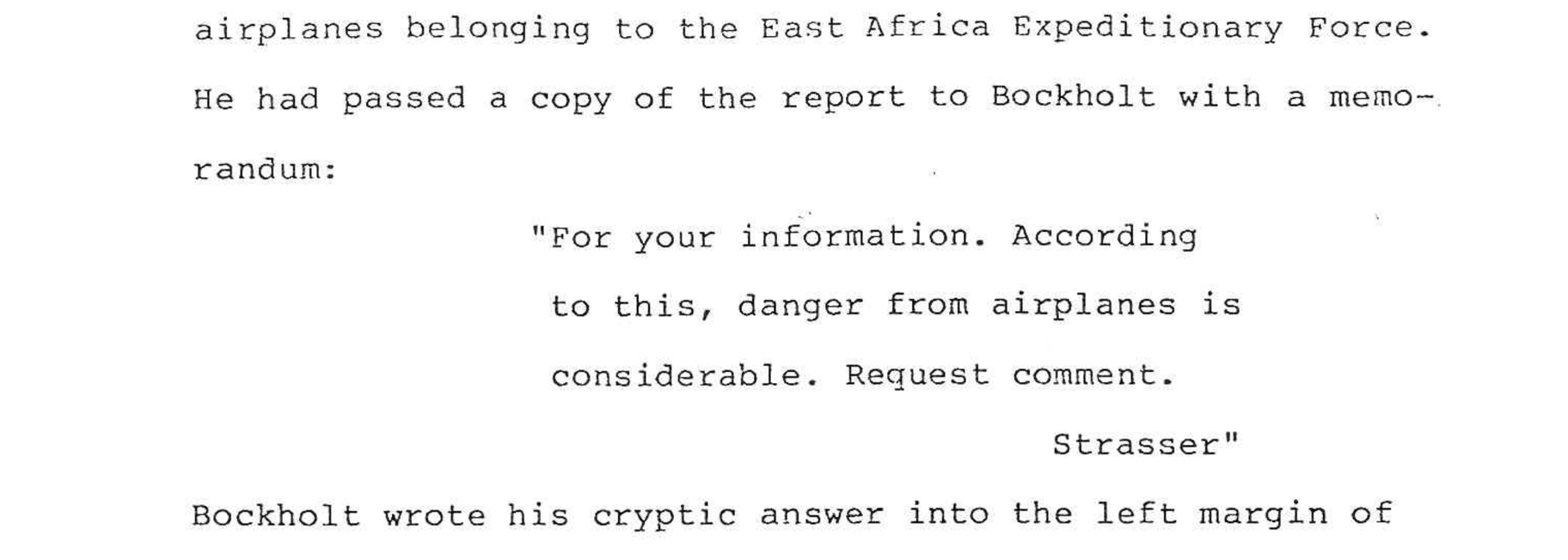
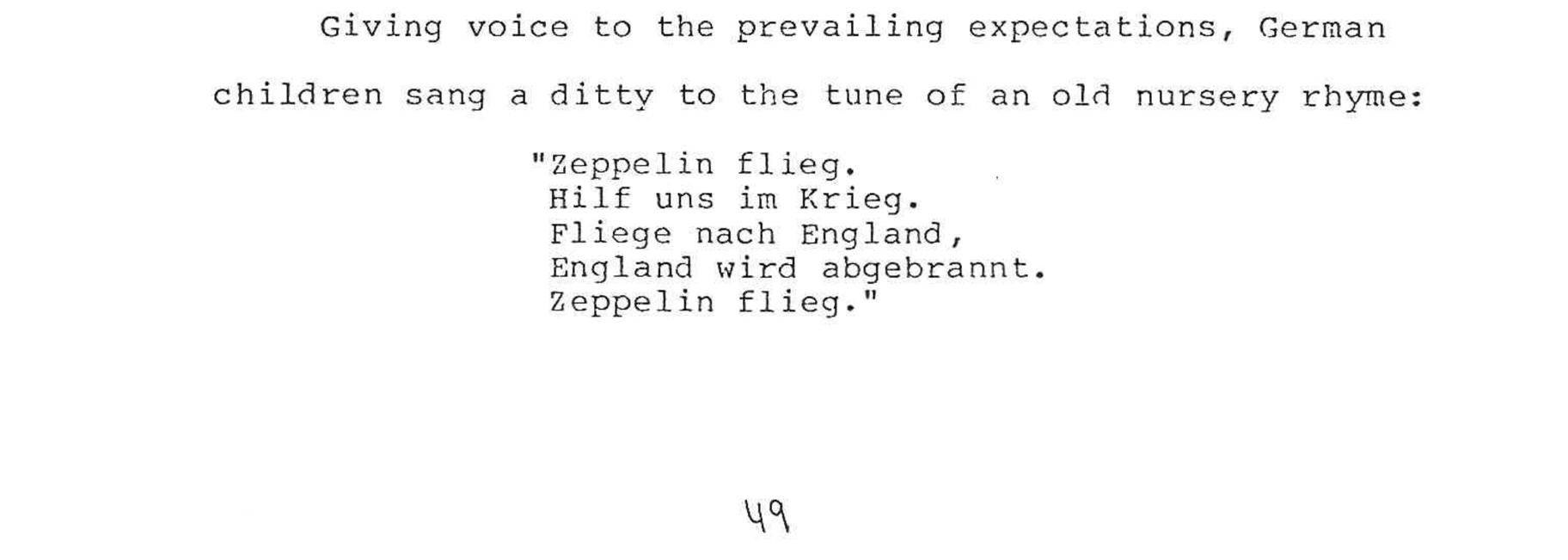
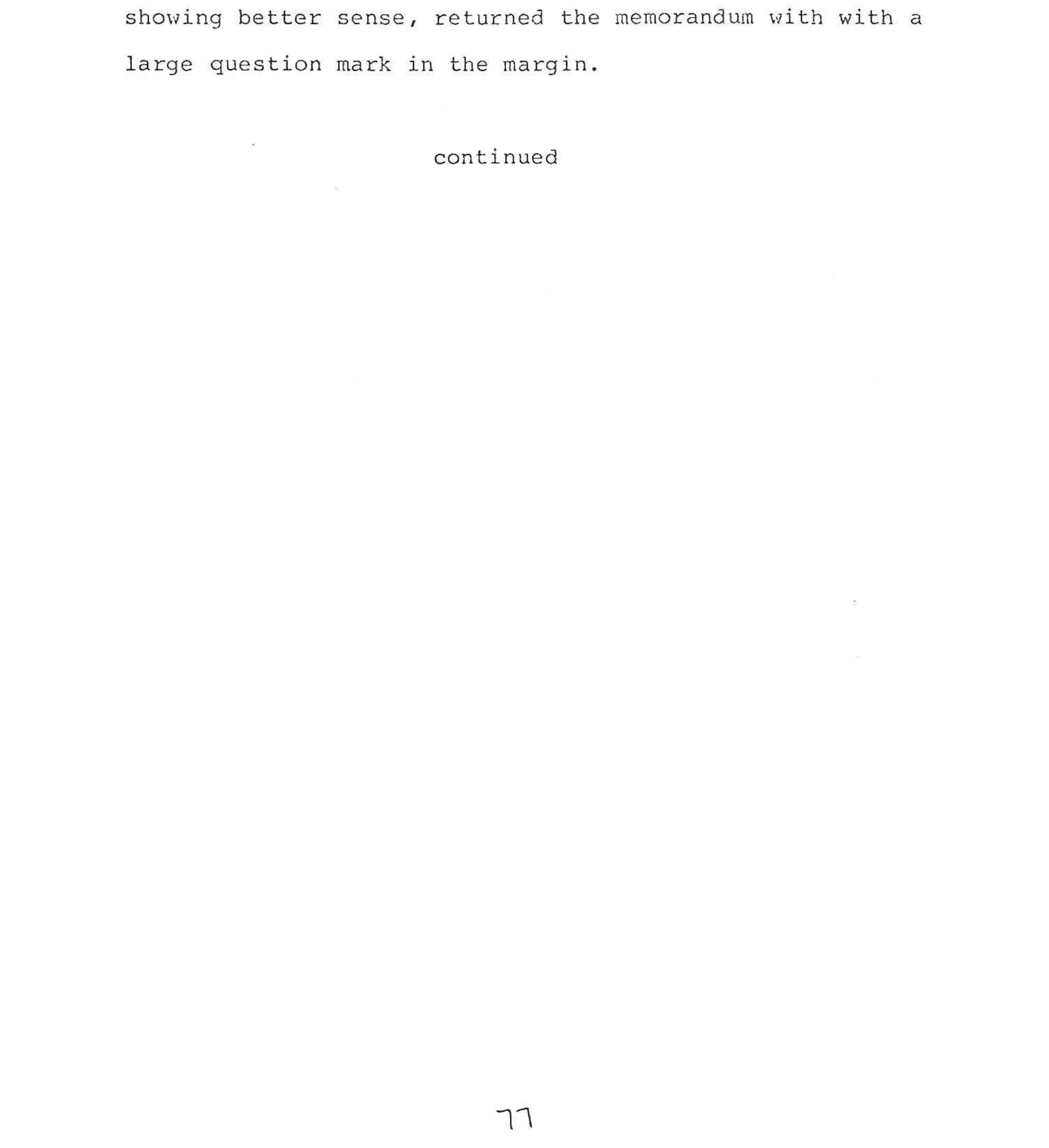
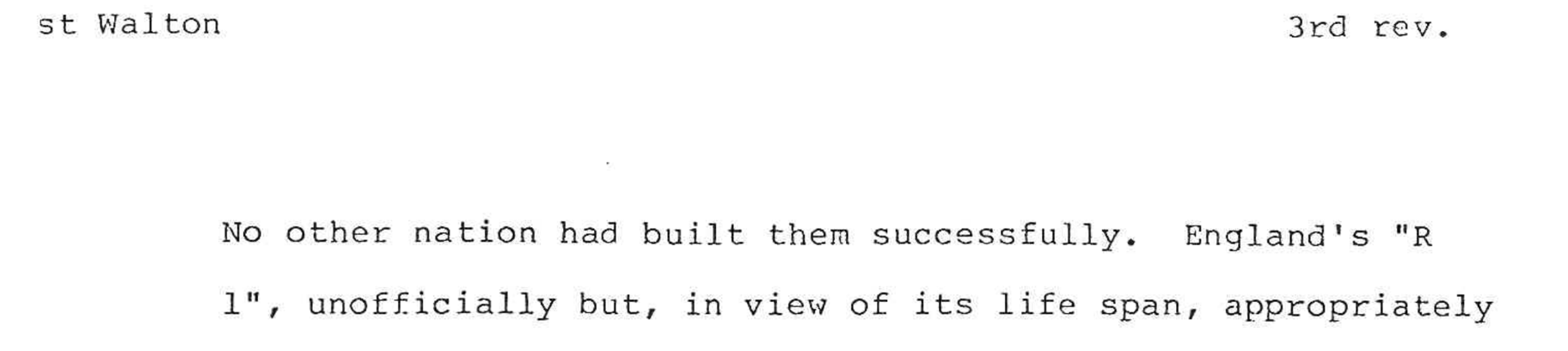
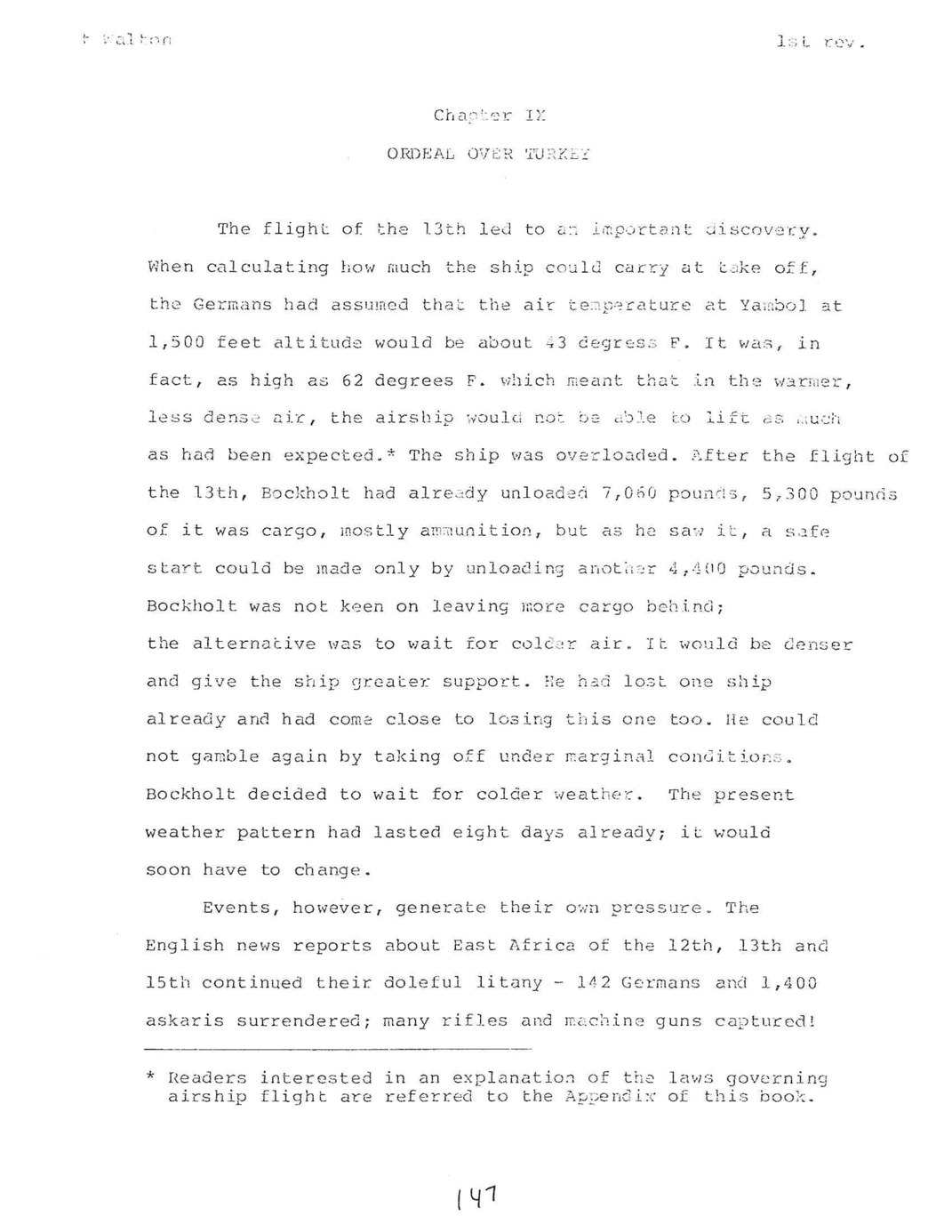
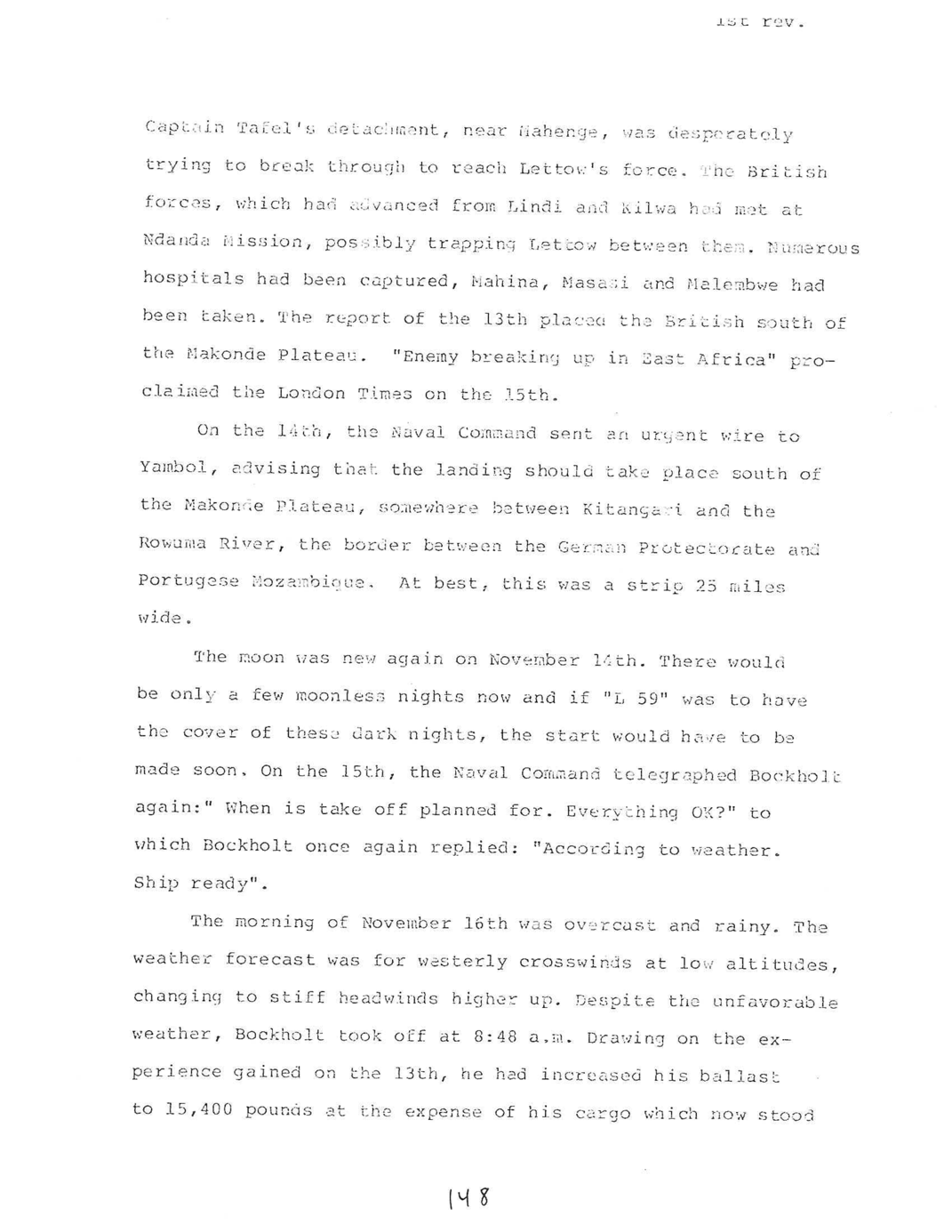
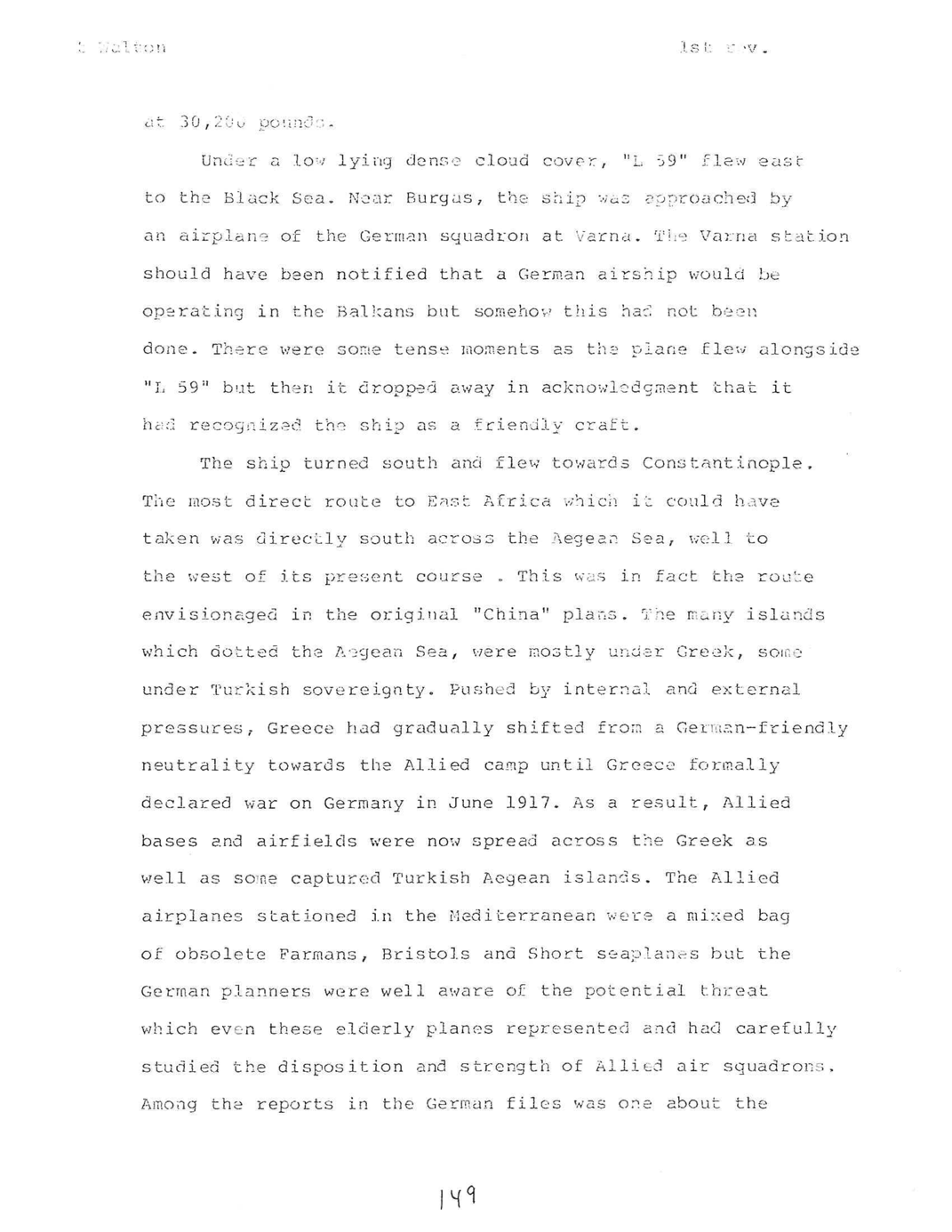
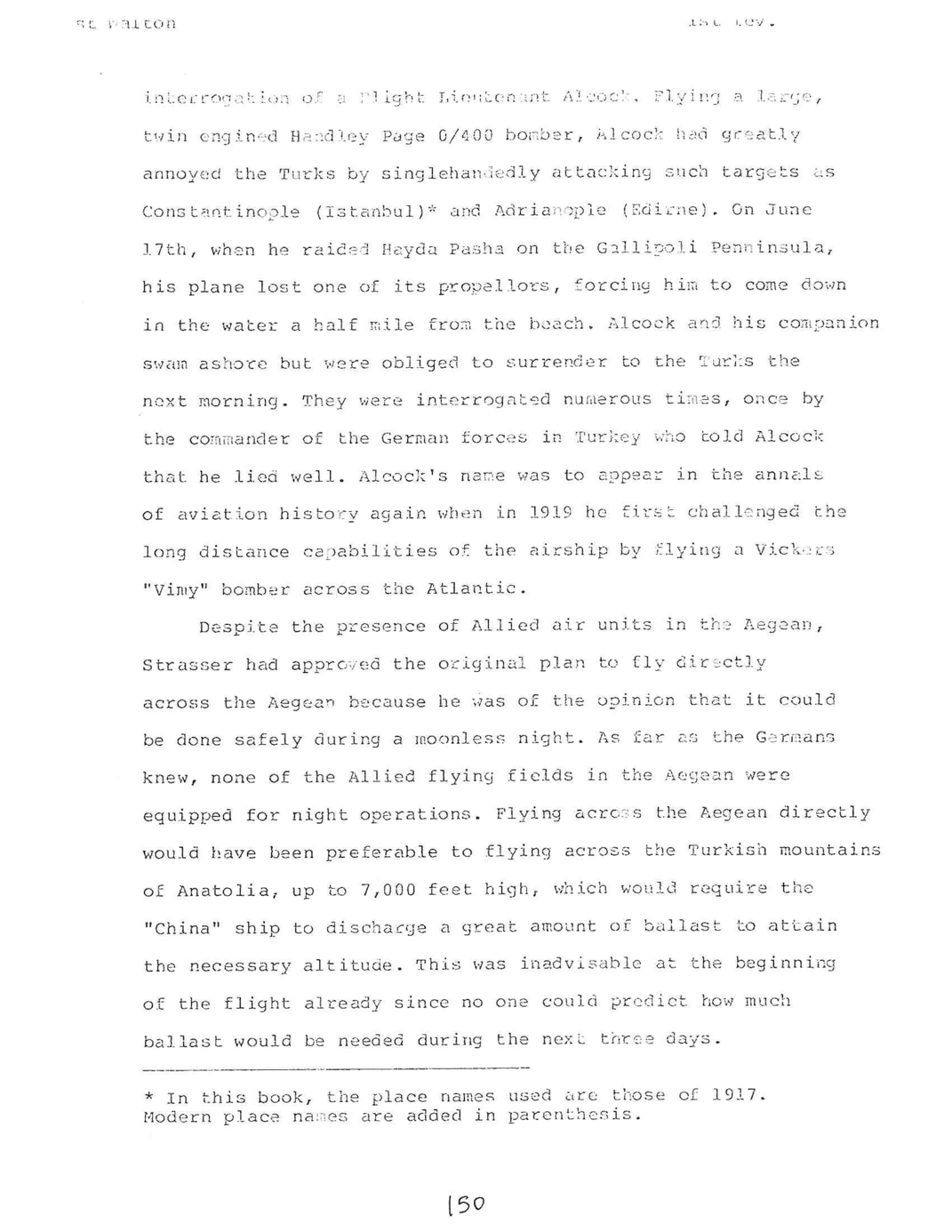
Scan page 1. The title page went through the scanner rotated ninety degrees, which is why its text had to be read separately from the rest.Scan page 8. The footnote rule is only about 250 px wide. A first pass looked for rules of 400 px or more and missed pages like this one.Scan page 154. Footnotes are single-spaced beneath a rule, while the body is double-spaced.Scan page 121. A quoted telegram: deeply indented but double-spaced, which ruled out line spacing as the signal for quoted matter.Scan page 52. The German children’s rhyme — centred and single-spaced, so it keeps its line breaks instead of being reflowed into a paragraph.Scan page 80. A short page ending in a centred “continued”. A production note from the typist, not part of the book, so it is dropped.Scan page 52. The one running head that sits below the usual band. It slipped into the body text until headers were matched by their shape rather than their position.
Umlauts, checked name by name
Scan page 27. Göppingen.Scan page 29. Schütte-Lanz, and Dr. Schütte.Scan page 105. Lt. Bödecker.Scan page 134. Göring, and Königin Augustastrasse.Scan page 225. Bröcker — the crew list that settled this spelling. The author also writes it “Broeker” elsewhere; both stand.Scan page 60. Spähkorb, the observation gondola.Scan page 183. Göbel, and his book Afrika zu unseren Füssen.Scan page 168. “Der Feind hört mit!” — the enemy is listening.
Passages read off the page
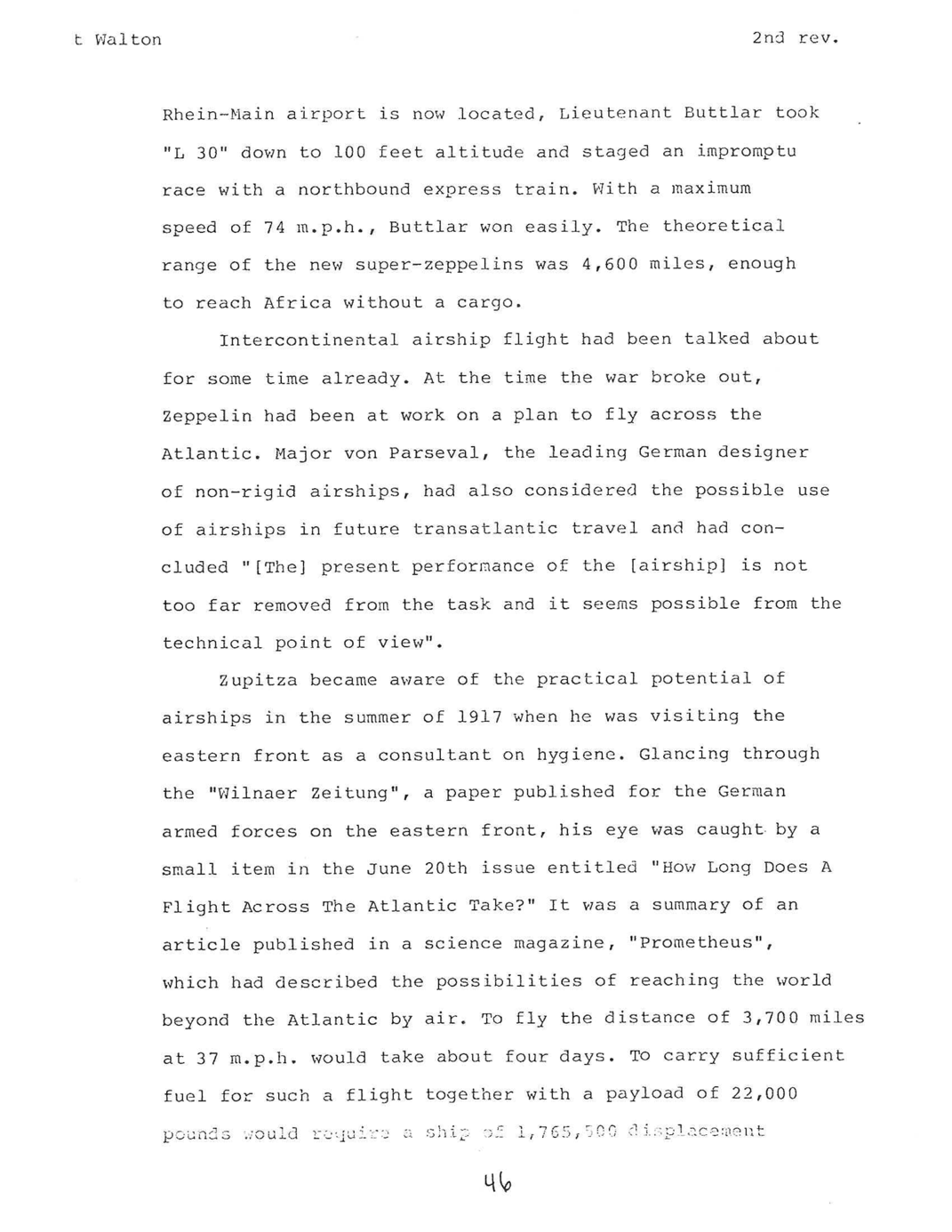
Scan page 49. Only the last line failed, so this page was corrected rather than retyped: “…would require a ship of 1,765,500 displacement”.Scan page 125. “in the freezing temperatures”, scanned as pErErnTER.Scan page 144. “as a spare elevator helmsman”, scanned as sletiakéel BeleGtiin.Scan page 158. “A spy does more than steal information.”Scan page 191. “duck under it at a low altitude”.Scan page 228. “already left. Mangelsdorf did not learn…”Scan page 232. “giving it the benefit of what he had learned…”Scan page 235. “leaving 29 dead and fifty injured”.Scan page 234. “the people of Naples ran curiously to…”
Checked, and deliberately left alone
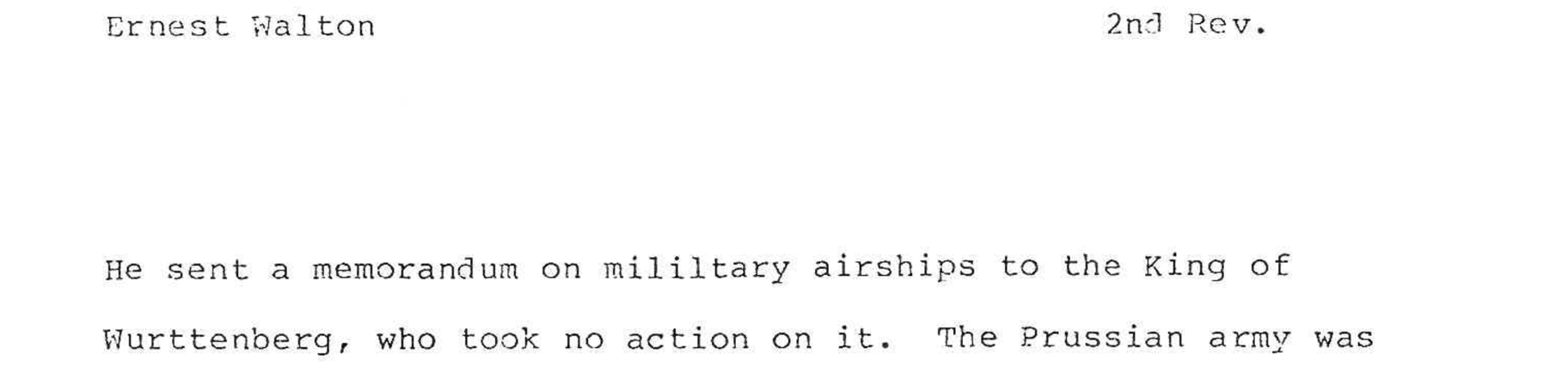
Scan page 25. “mililtary” is in the typescript. Not corrected.Scan page 150. “43 degress F.” is typed that way, with degrees spelled correctly on the next line. Not corrected.Scan page 253. “seems to have been into circulation” — the word put is genuinely absent from the page. An authorial slip, not a scanning loss.Scan page 166. Here the opposite: the page reads “code books.” and the scanner read a comma. Corrected, because it is a misreading rather than the author’s punctuation.Scan page 190. The sentence “…the sky was solidly overcast.” runs across a page break — it ends here…Scan page 191. …and completes here. The one-word line “overcast.” was faint enough that the noise filter was discarding it, silently truncating the sentence. Finding this is why the filter now never drops a plausible word.Scan page 230. The single editorial judgment in the book: doing struck through by hand, the correction above it too faint to read. Set as “did”.
The faint pages
Pages 150 to 156 are carbon copies. The machine dropped whole lines on
several of them, so these were read off the images and typed out in full.
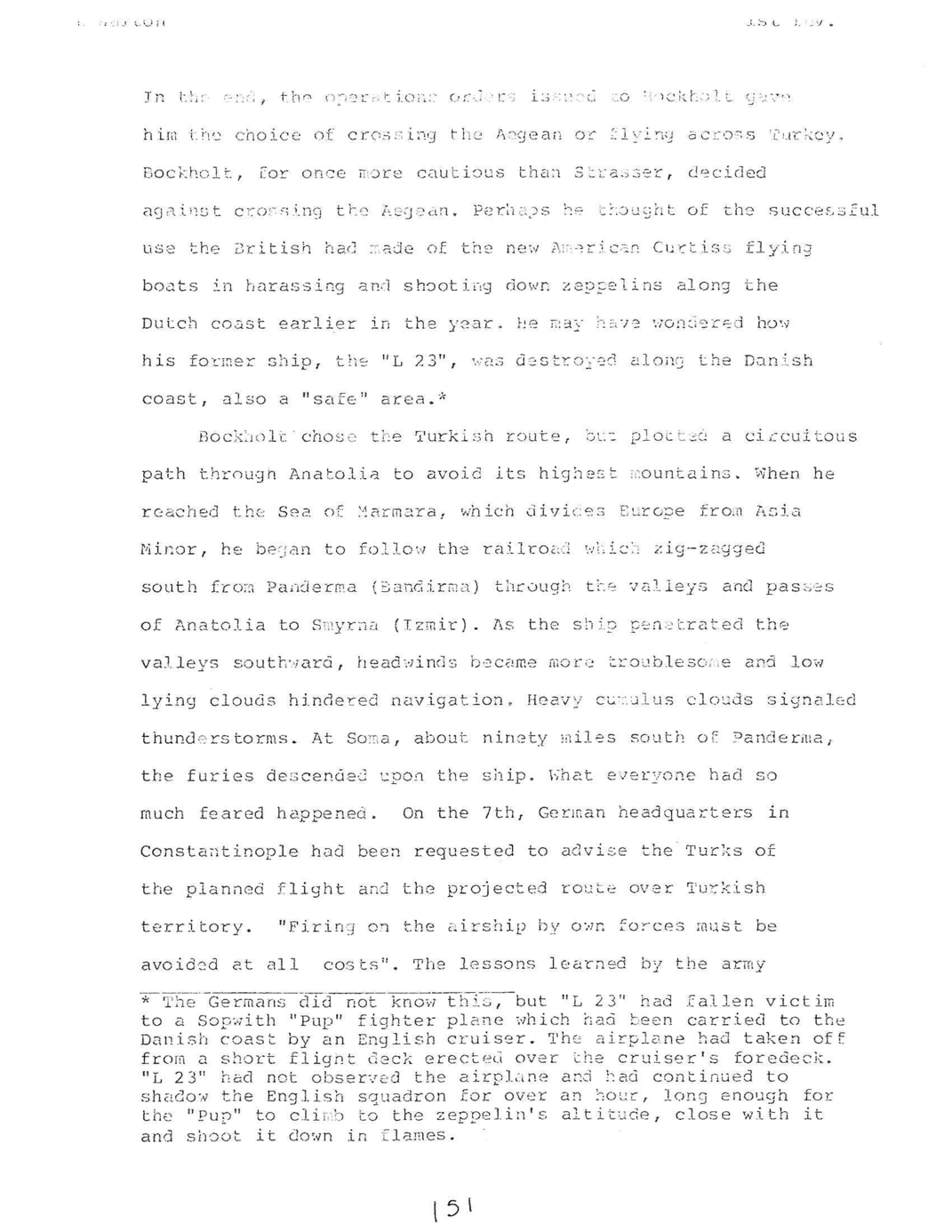
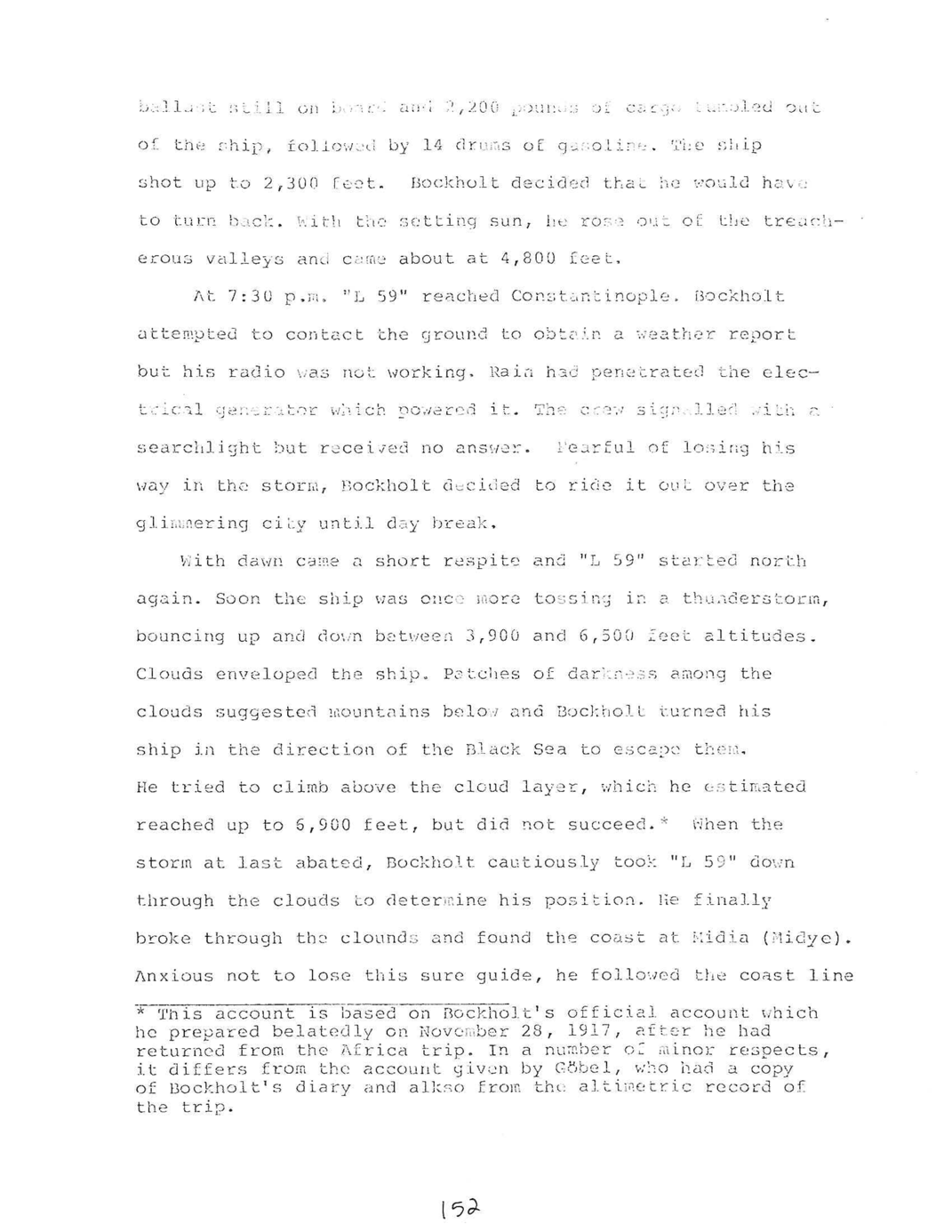
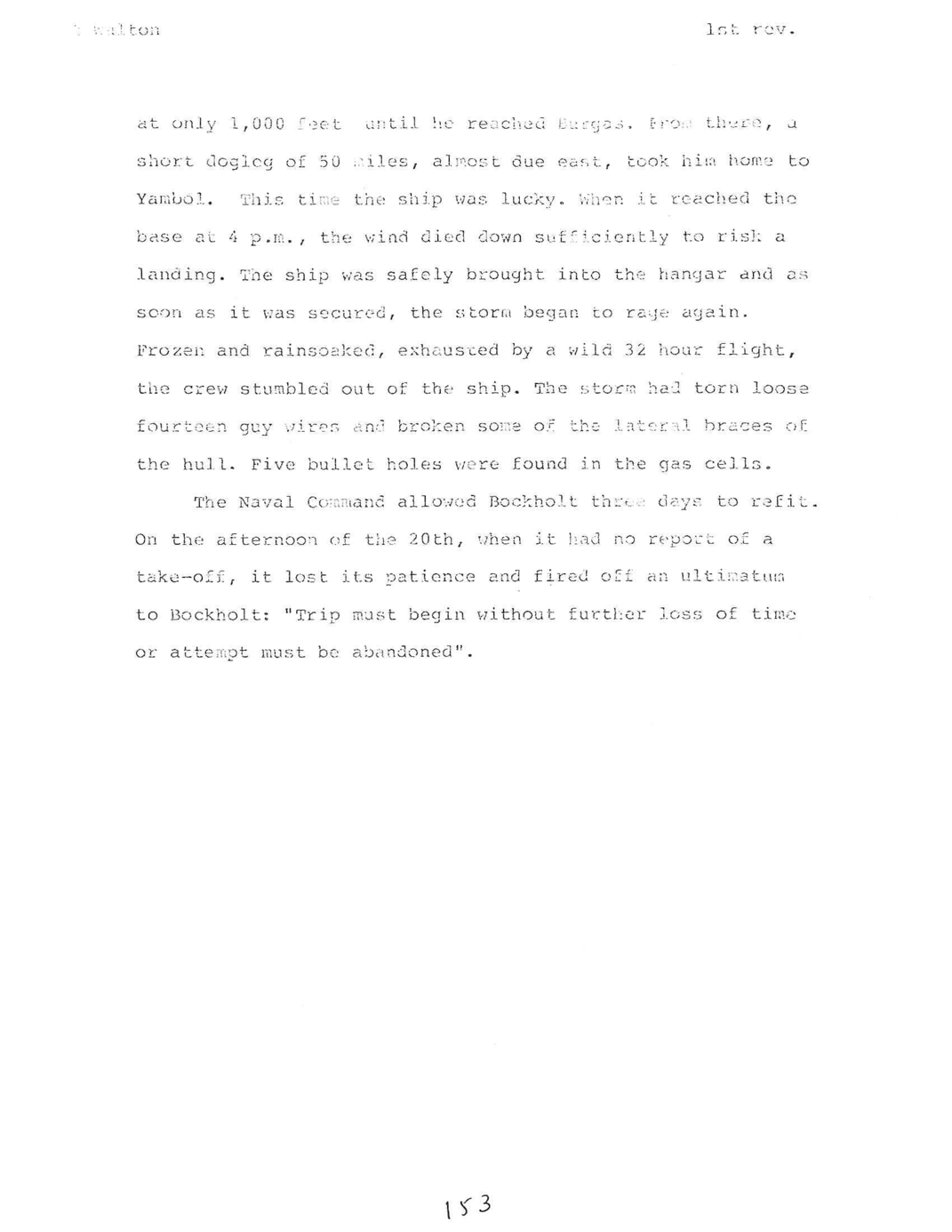
Scan page 150. Mean confidence 89.6% — retyped by hand.Scan page 151. Mean confidence 87.9% — retyped by hand.Scan page 152. Mean confidence 91.1% — retyped by hand.Scan page 153. Mean confidence 90.4% — retyped by hand.Scan page 154. Mean confidence 84.4% — retyped by hand.Scan page 155. Mean confidence 85.5% — retyped by hand.Scan page 156. Mean confidence 86.6% — retyped by hand.Scan page 49. Mean confidence 91.1% — but only the
last line failed, so this page was corrected rather than retyped. The
boundary between the two treatments is a judgment about how much of a page
has gone, not a fixed threshold.